





February 4, 2026
Installing a tent on your property can be a great way to create a covered outdoor workspace, equipment storage area, or operational space. Many businesses across Hawaii use these structures to expand their facilities without building a permanent structure.
Tents are commonly used for:
- Equipment storage
- Outdoor workspaces
- Contractor baseyards
- Material staging areas
- Temporary warehouse space
Before installing a tent, however, there are several important factors to consider to ensure the installation goes smoothly and the structure performs well long term.
1. Welding May Be Required
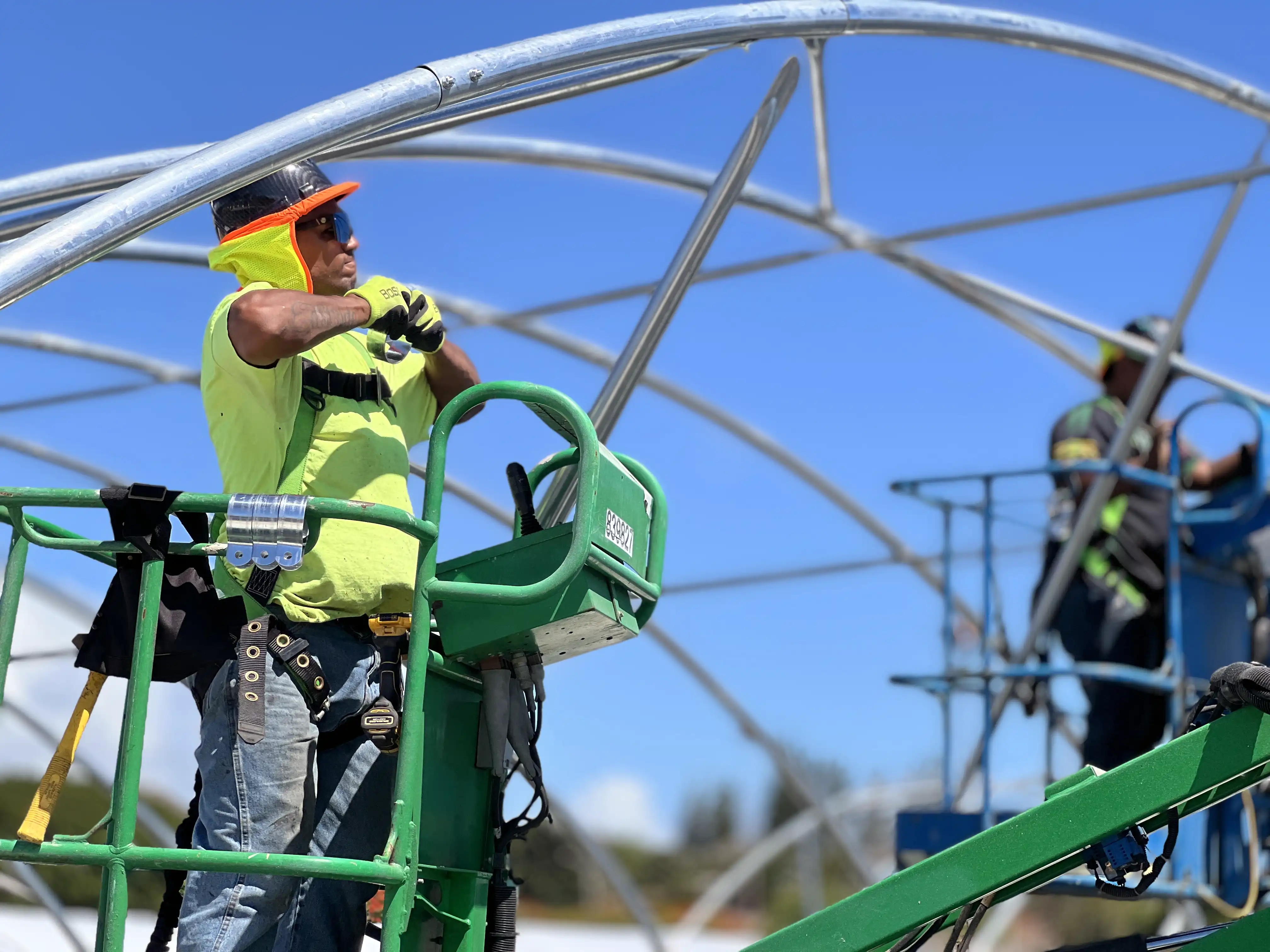
For container-mounted tents, the frame is typically secured directly to the containers using welded base plates. These base plates are included with the structure and must be welded to the container edges to keep the tent stable.
This step is important because it ensures the structure remains secure during long-term use and in changing weather conditions.
If you do not have access to welding equipment, you may need to hire a professional to complete this portion of the installation.
2. Wind Protection Is Important
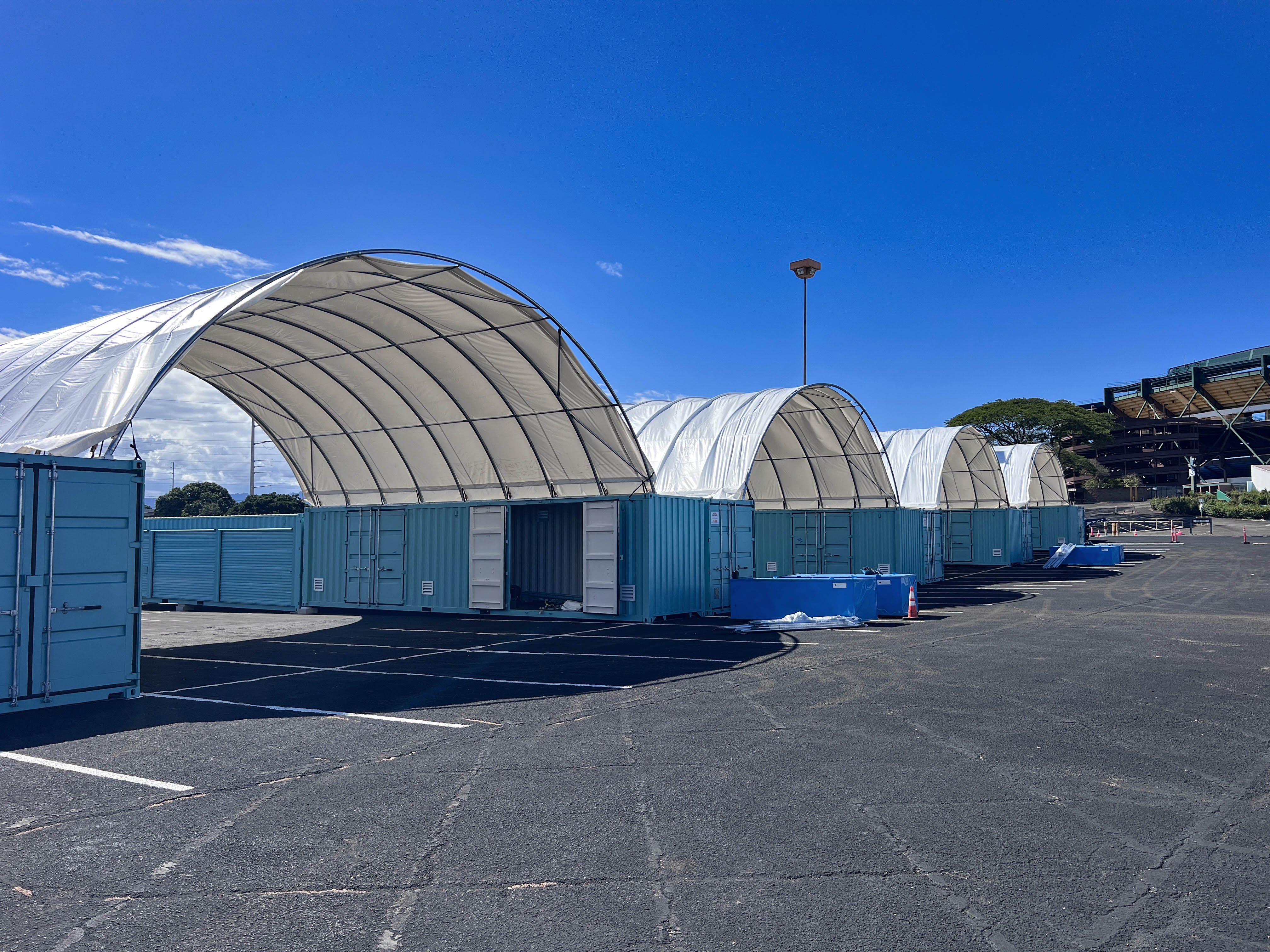
Tents are designed to withstand normal outdoor conditions, but strong storms require extra precautions.
For example, the fabric cover should be removed during windstorms above approximately 55 mph to prevent damage to the material.
The galvanized steel frame can remain installed, but removing the cover helps protect the structure and extend its lifespan.
This is especially important in Hawaii, where weather conditions can change quickly.
3. Plan For Delivery and Unloading
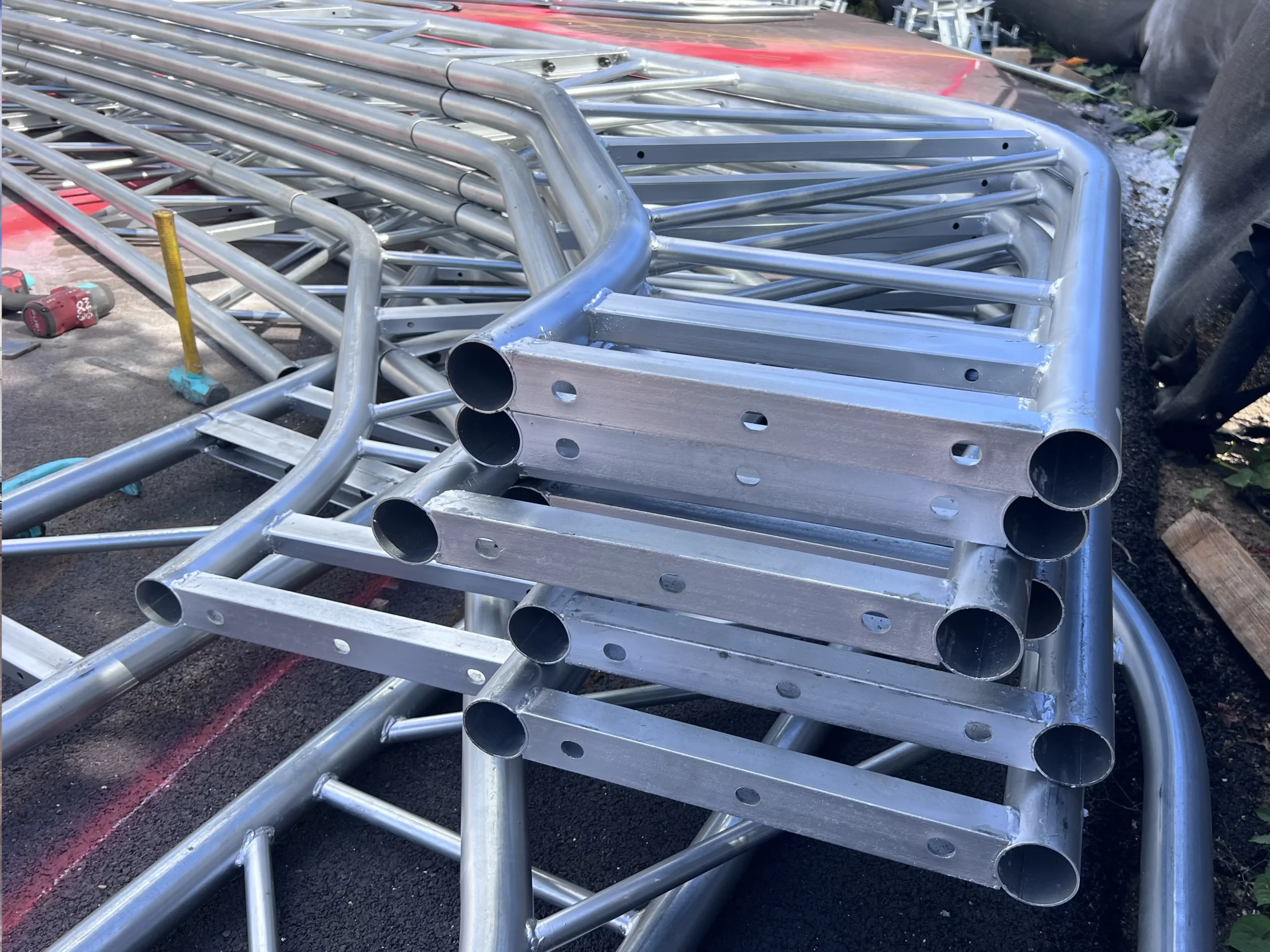
Tent structures can be heavy, especially larger models designed to cover wide workspaces.
For example:
- Smaller tents may weigh several hundred pounds
- Larger structures can weigh over 2,000 lbs or more
Because of this, forklifts or similar equipment are usually required to unload the structure when it arrives.
Planning ahead for unloading equipment helps ensure delivery goes smoothly.
4. Installation May Require Lifting Equipment
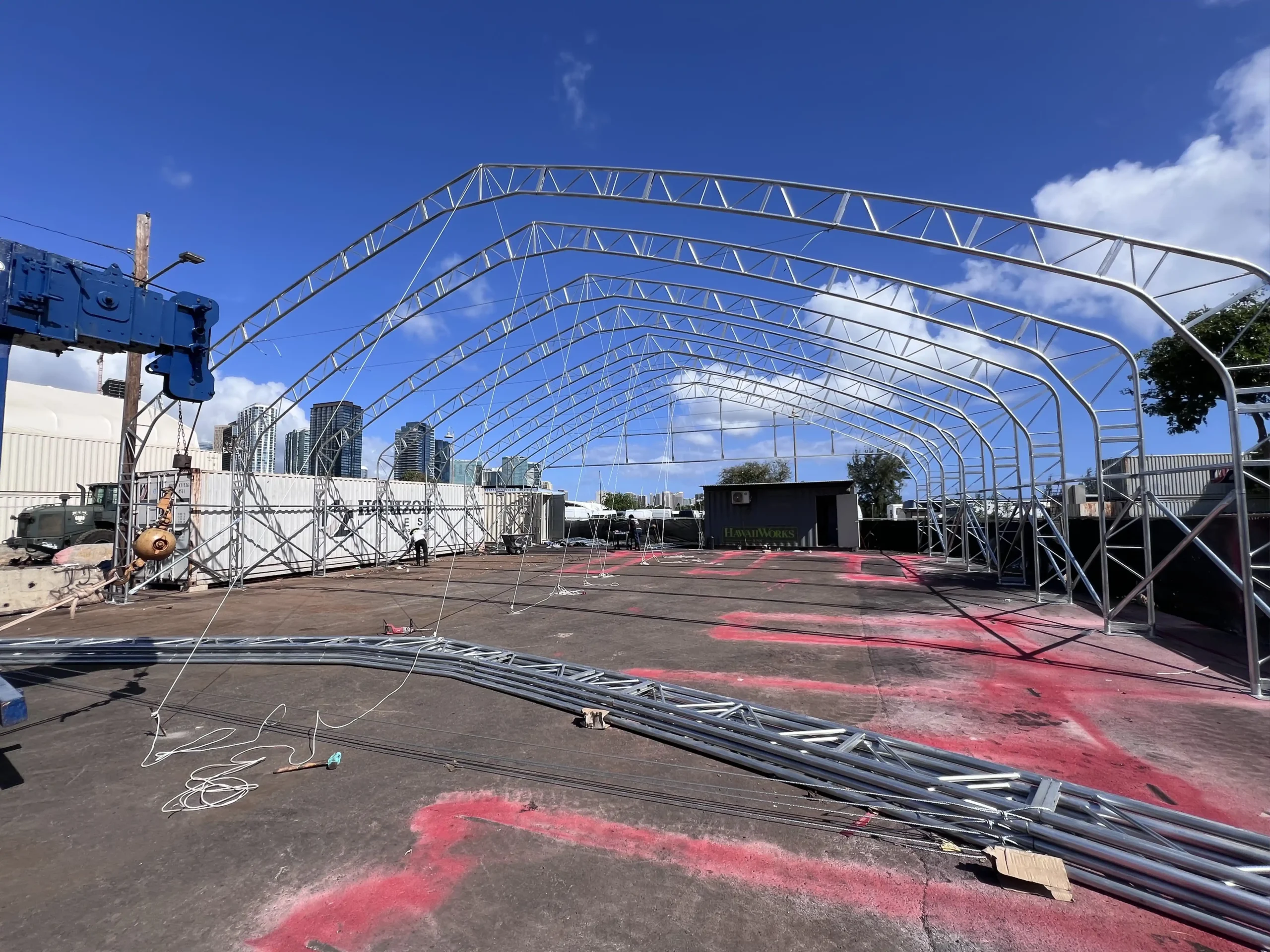
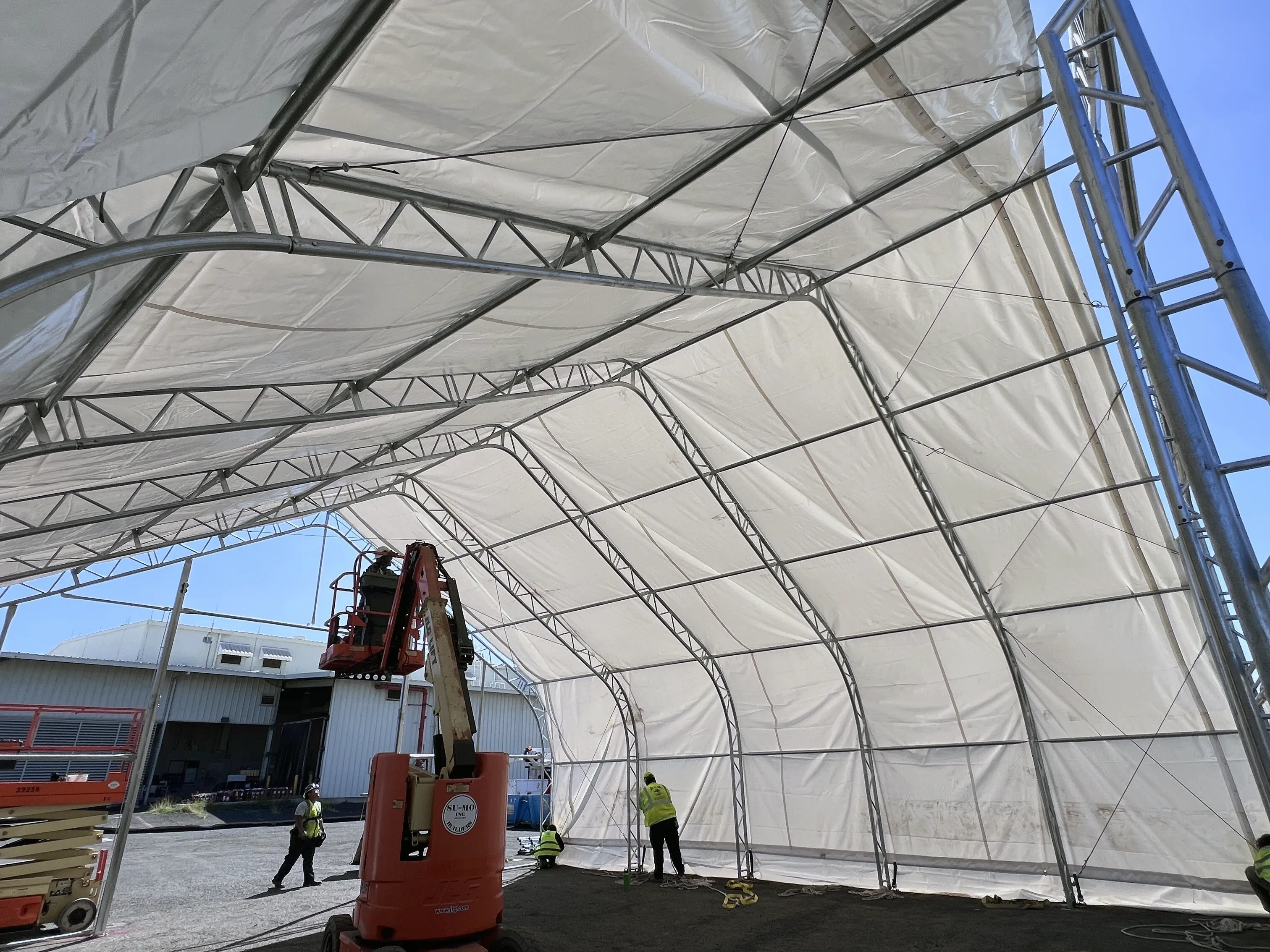
Tent frames are assembled using large structural components such as steel trusses or tubes. These pieces can be heavy and may require lifting equipment such as a crane or telehandler during assembly.
Using proper lifting equipment helps:
- Speed up installation
- Improve safety during assembly
- Ensure proper alignment of the structure
For larger tents, planning for lifting equipment ahead of time can significantly simplify the installation process.

5. Prepare Your Site
Before installing a tent, the installation area should be properly prepared.
Important site preparation steps include:
- Leveling the ground
- Ensuring proper drainage
- Positioning containers correctly (if using container-mounted tents)
- Confirming there is enough clearance for the structure
Proper site preparation helps prevent structural issues and makes the installation process much easier.
6. Check Local Regulations
Depending on the intended use, some locations may require permits or approvals before installing a tent structure.
For properties in Hawaii, it’s a good idea to check with local planning departments or the Department of Planning and Permitting (DPP) to confirm whether any approvals are required.
Checking these requirements early helps avoid delays or compliance issues later.
7. Choose The Right Tent Size
Tents come in several sizes depending on how much covered space you need.
Common sizes include:
- 20′ × 20′ tents for smaller storage or workspace needs
- 20′ × 40′ tents for mid-sized equipment areas
- 40′ × 40′ tents for large workspaces or operational yards
When selecting a size, consider:
- Equipment or materials that will be stored under the tent
- Clearance for vehicles or forklifts
- Future expansion needs
Choosing the right size ensures the structure supports your operations effectively.
Tents Available in Hawaii
At HIWASTE MFG, we offer durable tents for outdoor operations in Hawaii, including both container tents and free-standing tents depending on your installation needs.
These structures are commonly used for:
- Covered workspaces
- Equipment storage
- Outdoor fabrication areas
- Temporary warehouse space
If you're looking for container tents or free-standing tents in Hawaii, click the buttons below to get in contact with us or send us a message, and our team can help you choose the right setup for your property.

















%20copy.avif)