





September 2, 2023
For junk removal companies, construction contractors, and waste haulers across Hawaii, dumpsters are essential pieces of equipment. Like any heavy-duty asset, roll-off and hooklift dumpsters experience constant stress from heavy materials, abrasion, weather exposure, and transport.
While these dumpsters are built to handle demanding environments, preventative maintenance can significantly extend their service life and reduce long-term repair costs. Regular cleaning, inspections, and proactive repairs help maintain structural integrity and prevent small issues from becoming expensive problems.
Below are several practical maintenance practices that experienced operators use to keep dumpsters performing reliably.
1. Control Rust Before It Starts
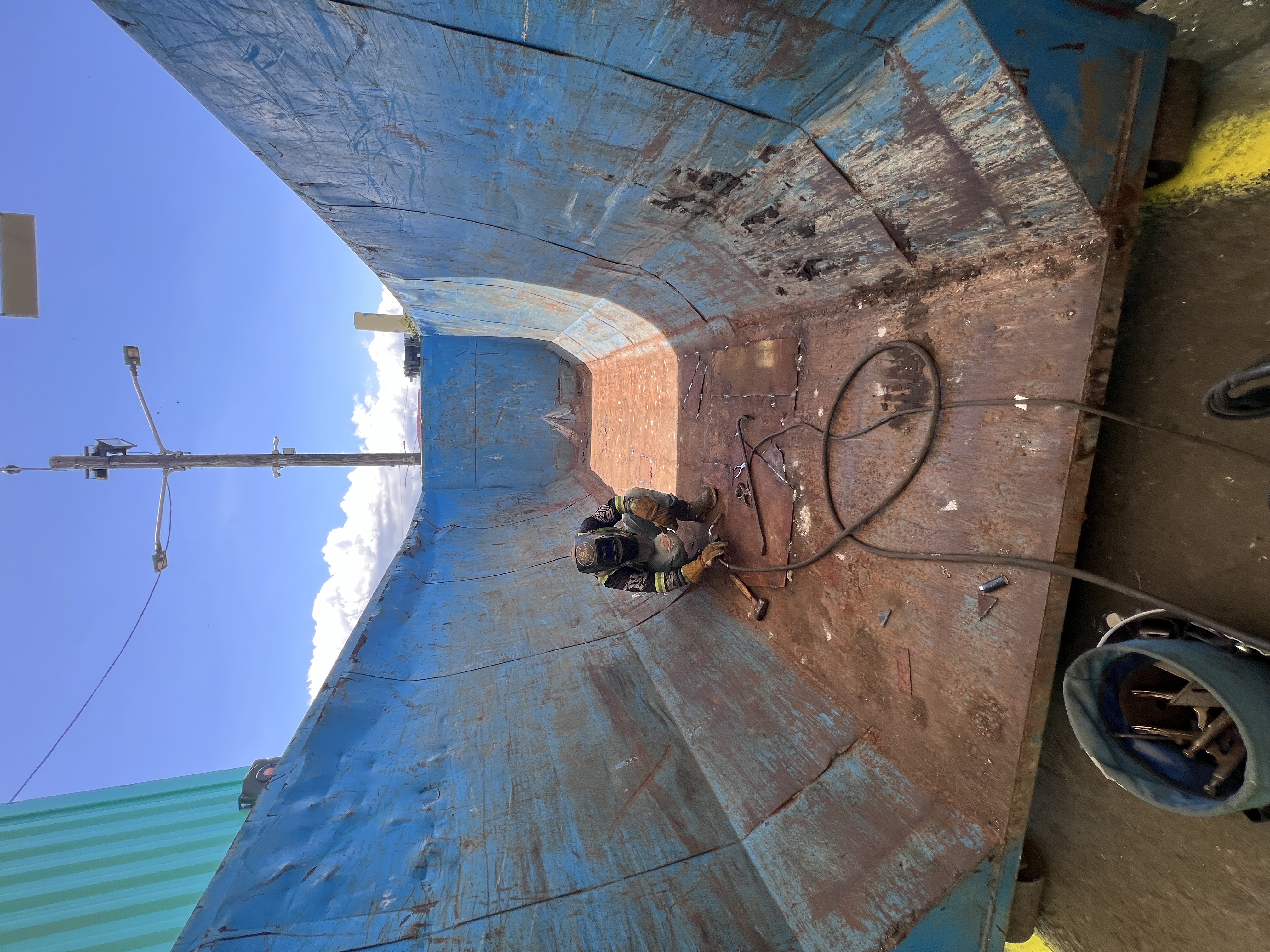
Rust and corrosion are among the most common causes of dumpster deterioration, especially in humid or coastal environments like Hawaii. Moisture, salt air, and organic waste residues can accelerate corrosion if exposed metal is left untreated.
Operators should regularly:
- Inspect for chipped paint or exposed steel
- Touch up scratched areas with protective coatings
- Wash out debris that traps moisture inside the bin
Addressing small paint damage early prevents rust from spreading across floors, seams, and weld points.
2. Pay Special Attention to the Floor and Underside
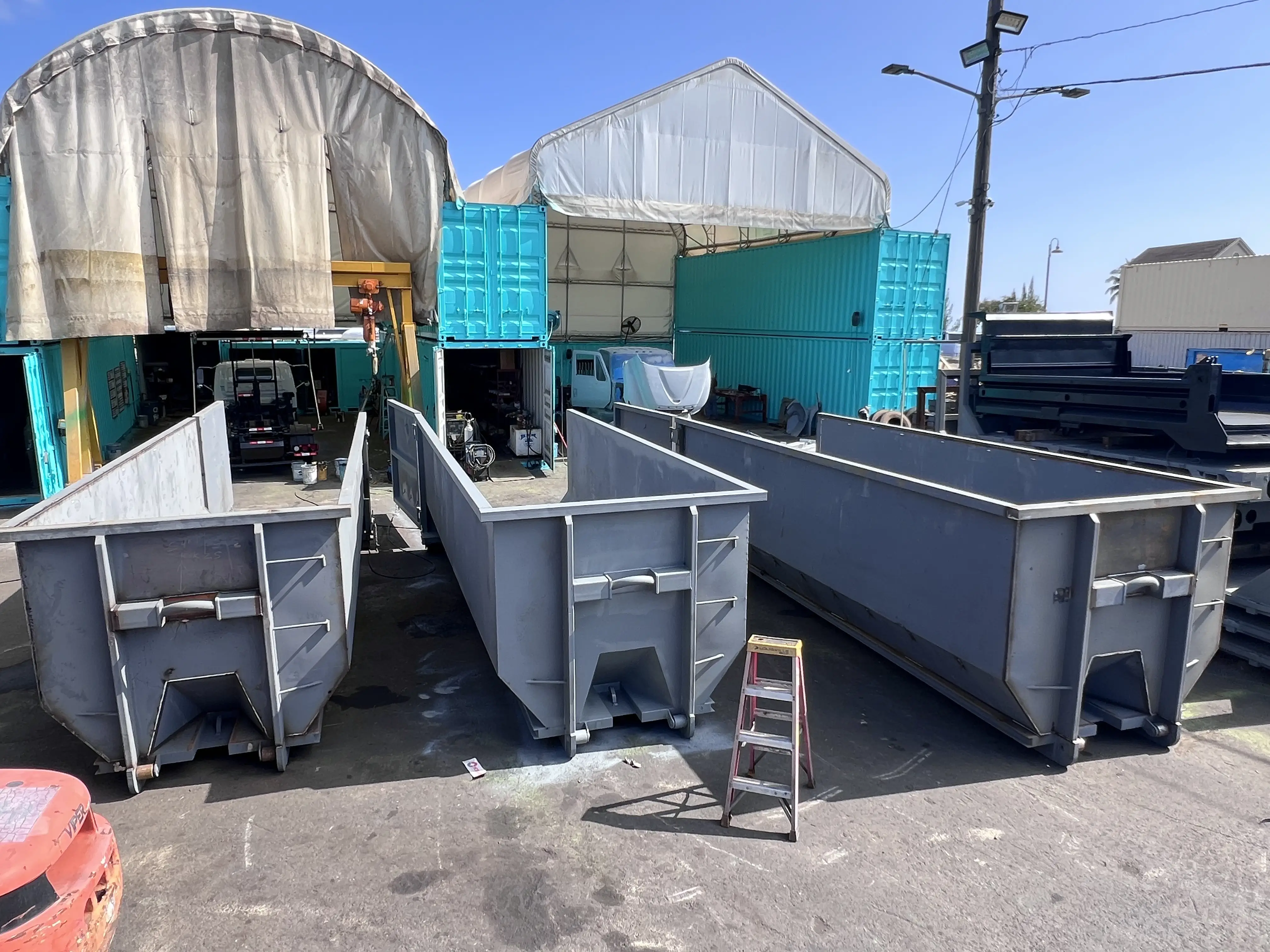
The floor of a dumpster absorbs the majority of the stress from heavy debris such as concrete, metal, and demolition material. Over time this can cause wear, dents, or structural fatigue.
For dumpsters used by construction and junk removal companies, it’s good practice to:
- Inspect the underside for cracks or thinning steel
- Look for soft spots or warping in the floor plate
- Check crossmembers and structural supports
Early detection allows you to repair or reinforce these areas before major structural damage occurs.
.jpeg)
3. Maintain Moving Parts and Hardware
Many dumpster failures happen at high-stress connection points, including:
- Rear doors and hinges
- Latches and locking mechanisms
- Rollers or hooklift rails
- Door reinforcement brackets
Greasing hinges and latching hardware regularly reduces friction and prevents premature wear. Routine lubrication also makes dumpsters easier for crews to operate in the field.
4. Train Crews on Proper Loading Practices
Even well-built dumpsters can be damaged by improper loading techniques.
For companies operating their own roll-off or hooklift dumpsters, crews should be trained to:
- Distribute heavy materials evenly across the floor
- Avoid concentrating weight on one corner
- Break down bulky items to reduce impact damage
- Keep loads level with the top rail
Balanced loads reduce structural stress and help prevent warping or sidewall damage over time.
%20copy.webp)
5. Schedule Periodic Repairs and Refurbishing
Even with good maintenance practices, dumpsters eventually show signs of wear. Instead of replacing a container immediately, many companies choose dumpster repair or refurbishment.
Typical refurbishment work may include:
- Welding structural repairs
- Replacing damaged floors or panels
- Sandblasting and repainting
- Repairing doors and hinges
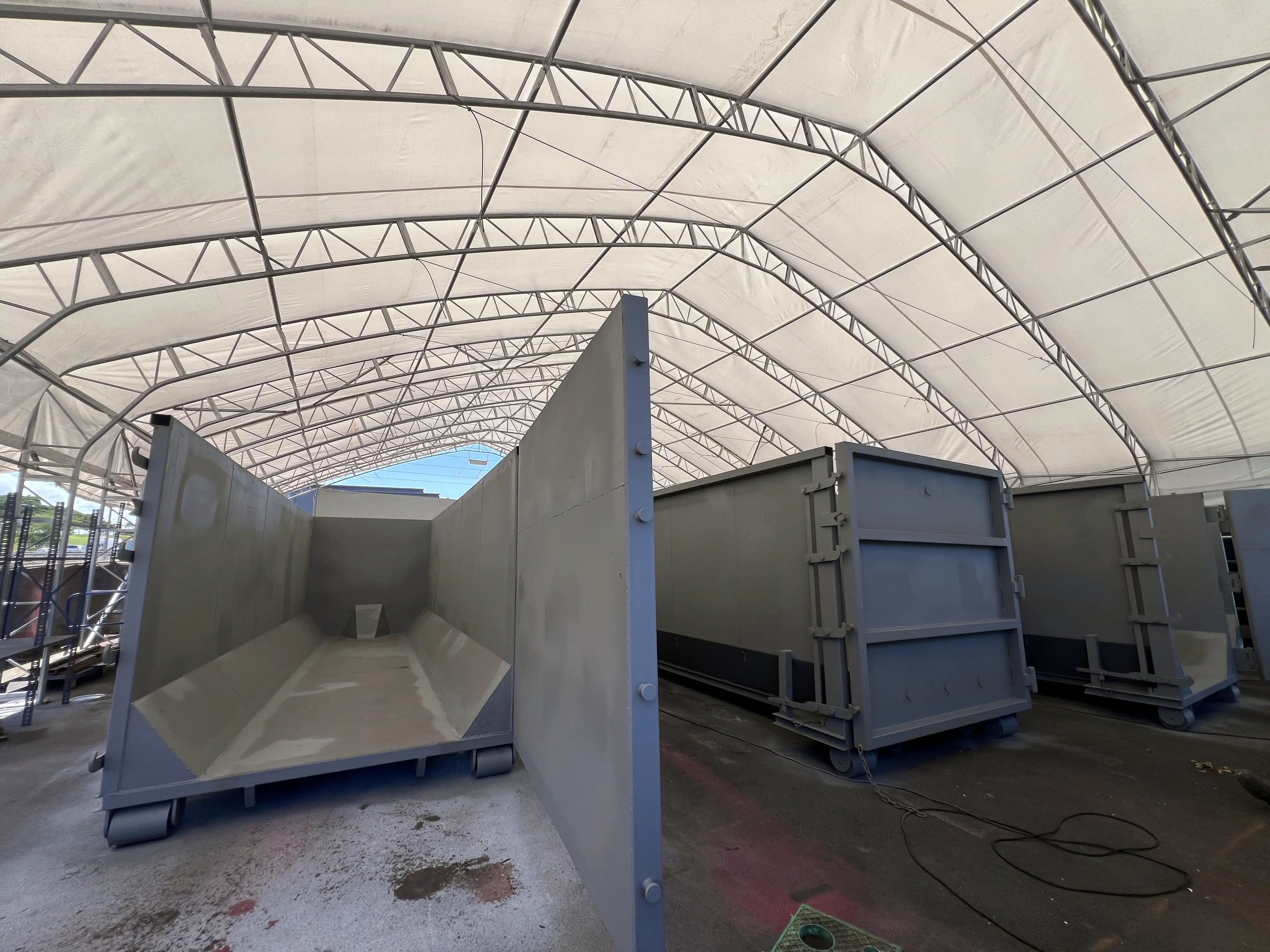
These services can significantly extend the lifespan of a dumpster while restoring its structural integrity and appearance.
At HIWASTE MFG, we offer dumpster repair and refurbishing services designed to revitalize existing dumpsters and keep them operating reliably with minimal downtime.

Protect Your Equipment Investment
Dumpsters are some of the hardest-working assets in a waste operation. For businesses operating in Hawaii, consistent maintenance helps prevent corrosion, structural damage, and operational downtime.
By focusing on rust prevention, structural inspections, hardware maintenance, proper loading practices, and periodic refurbishment, operators can extend the life of their dumpsters and protect their equipment investment.
If your dumpsters need repairs, reinforcement, or refurbishment, click the buttons below to get in contact with us or send us a message, and our team can help restore your equipment and keep your operation running smoothly.


















%20copy.avif)