





August 22, 2023
For junk removal businesses, contractors, and waste haulers across Hawaii, maximizing the capacity of your roll-off or hooklift dumpsters can significantly improve operational efficiency. Every load matters. Poorly loaded dumpsters can lead to unnecessary hauls, wasted space, and reduced productivity.
Companies that own and operate their own dumpsters and trucks benefit from consistent loading practices that allow crews to move more material per trip while maintaining safe hauling conditions. The goal is not just to fill the dumpster, but to load it strategically so your equipment works as efficiently as possible.
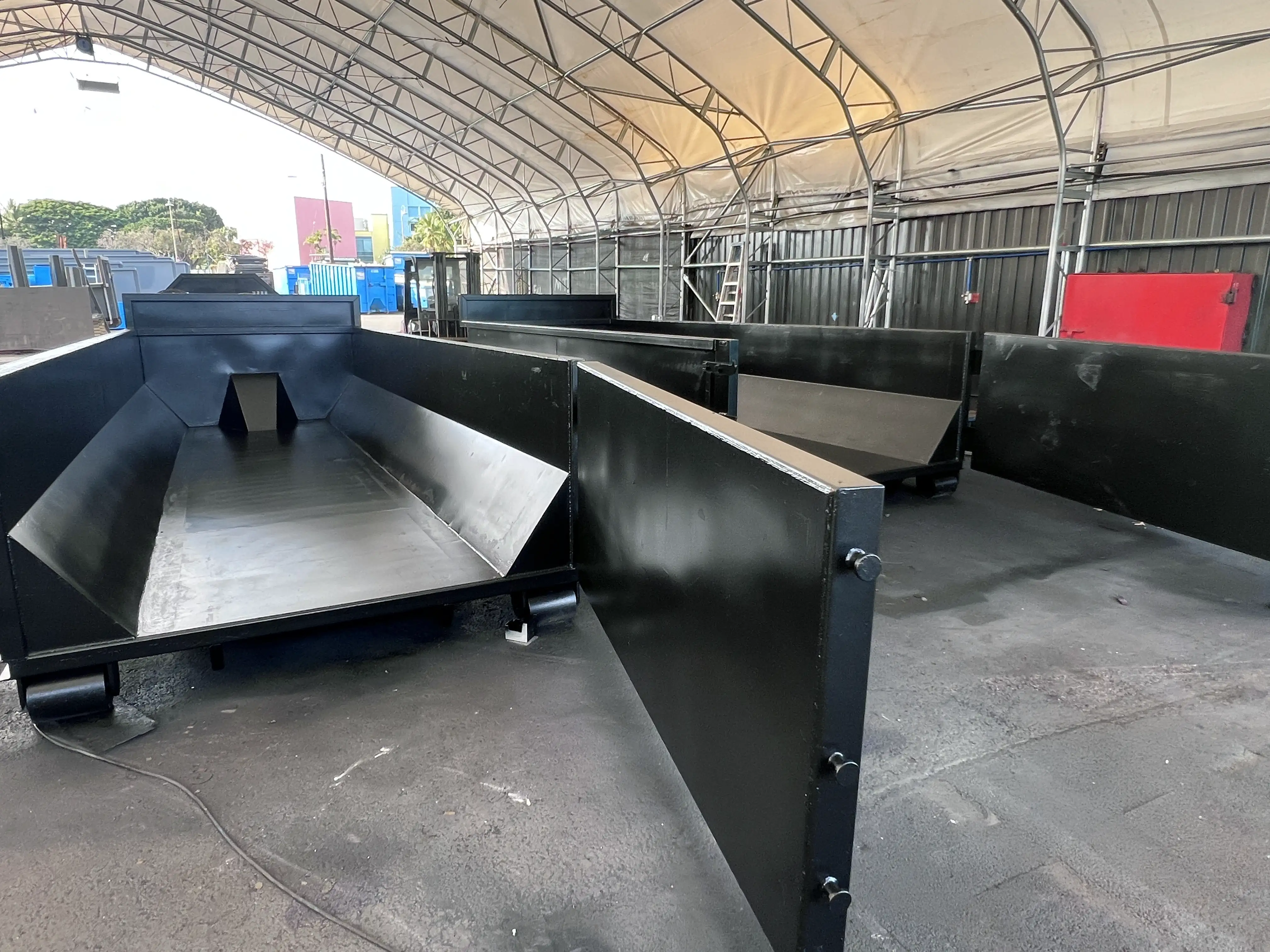
1. Start With Dense and Bulky Materials
When loading roll-off or hooklift dumpsters, the best approach is to start with the largest and densest materials first.
Examples include:
- Furniture and appliances
- Demolition debris
- Lumber and framing materials
- Large construction waste
Placing these materials at the bottom creates a stable base layer and prevents large items from taking up valuable space later in the load.
For junk removal crews and construction teams, this step alone can dramatically increase the amount of debris that fits into a single dumpster.
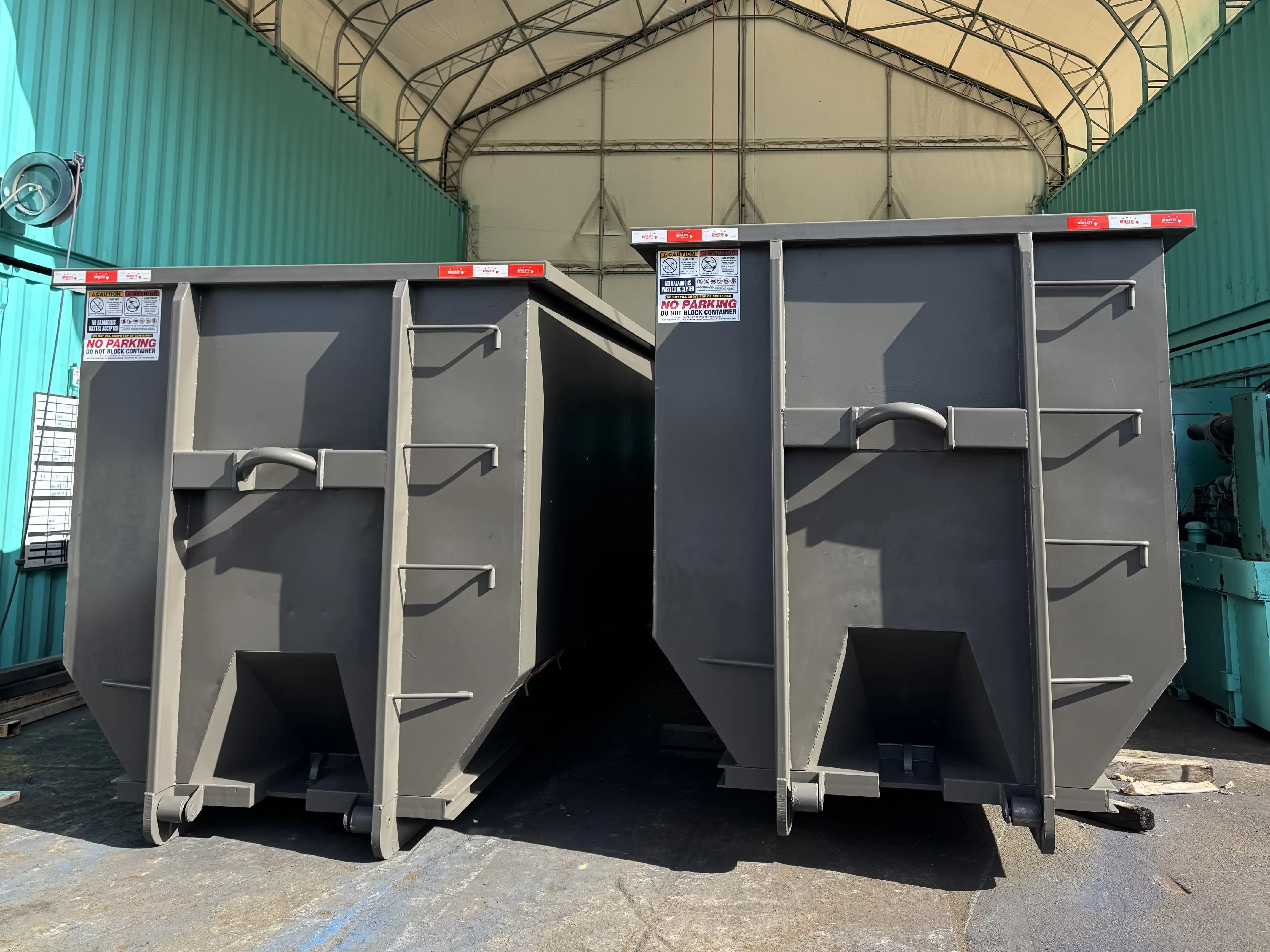
2. Break Materials Down Before Loading
One of the biggest causes of inefficient loads is air space between materials. Breaking items down before loading allows crews to maximize the usable volume of the dumpster.
Common examples include:
- Breaking down furniture
- Cutting long lumber or trim pieces
- Flattening cardboard boxes
- Disassembling shelving or cabinets
For junk removal companies, this practice helps reduce the number of loads required for a project.
.jpeg)
3. Use Smaller Debris to Pack the Load
Once larger materials are placed inside the dumpster, crews should begin filling gaps with smaller debris.
Examples include:
- Drywall scraps
- Small wood pieces
- Yard debris
- Loose construction waste
This packing method allows operators to fully utilize the capacity of roll-off or hooklift bins instead of leaving unused space between large items.
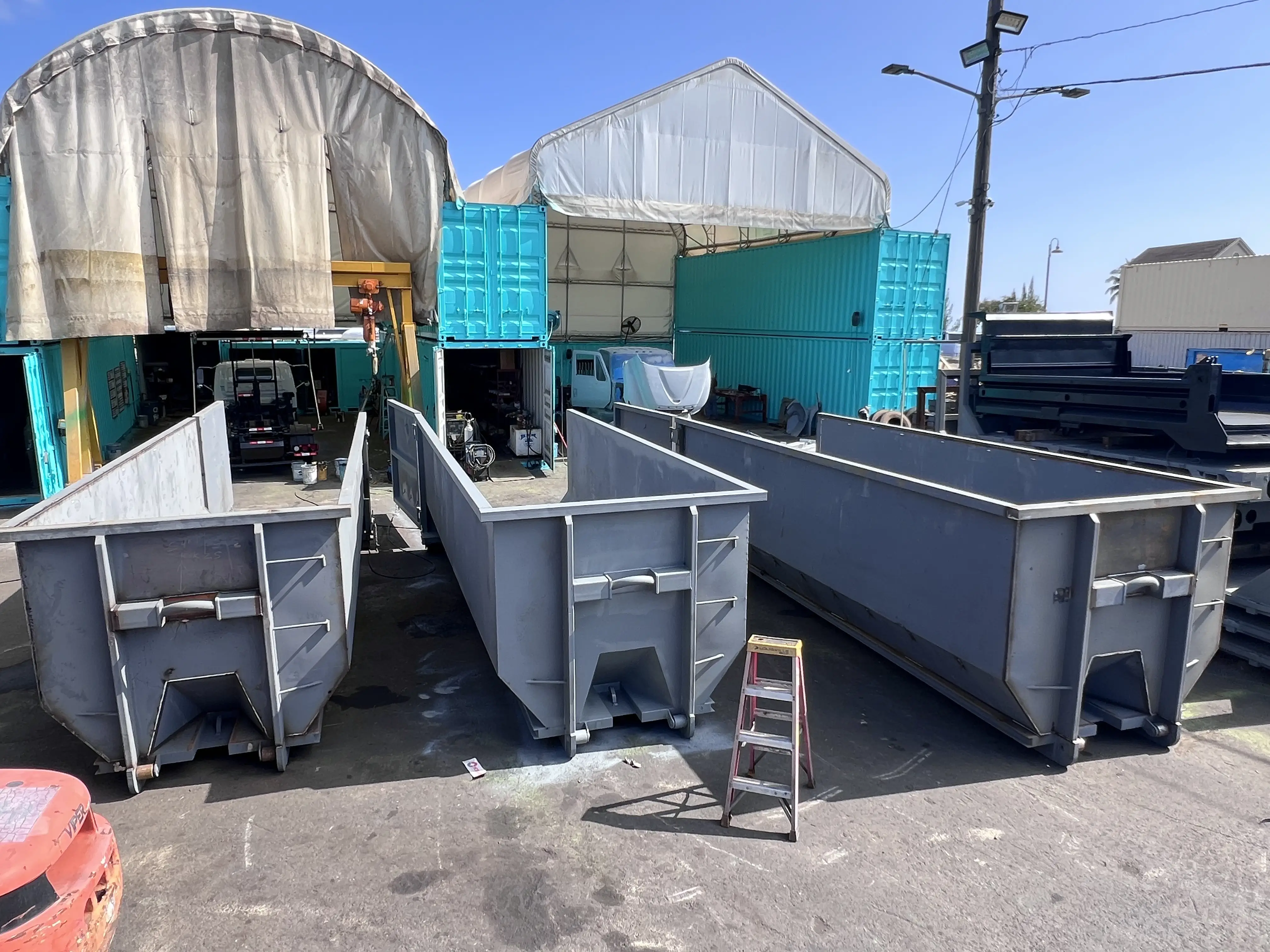
4. Balance Weight Across the Dumpster
Proper weight distribution is critical when operating roll-off or hooklift trucks.
If heavy debris is concentrated in one area, it can create issues when the dumpster is lifted or transported.
To avoid this:
- Spread heavy debris across the floor
- Avoid stacking dense materials in one corner
- Place lighter materials on top of heavier debris
Balanced loads help protect your equipment and ensure smoother hauling.
%20copy.webp)
5. Keep Loads Level With the Top Rail
Even when crews are trying to maximize capacity, it is important to avoid overfilling the dumpster.
Loads that extend above the top rail can create:
- Safety hazards during transport
- Debris falling from the load
- Delays when hauling
Keeping loads level with the top edge of the dumpster ensures safe transportation and avoids unnecessary problems on the road.

Improve Productivity With Smarter Loading
For companies that operate their own roll-off or hooklift dumpsters in Hawaii, efficient loading practices directly impact profitability. The more debris you can safely move in each trip, the fewer hauls required to complete a project.
By training crews to start with large materials, break items down, pack smaller debris, balance weight, and keep loads level, junk removal and construction businesses can make the most of every load.
If you are looking to expand your fleet with roll-off or hooklift dumpsters, click the buttons below to get in contact with us or send us a message, and our team can help you determine the right bins for your operation.

















%20copy.avif)